
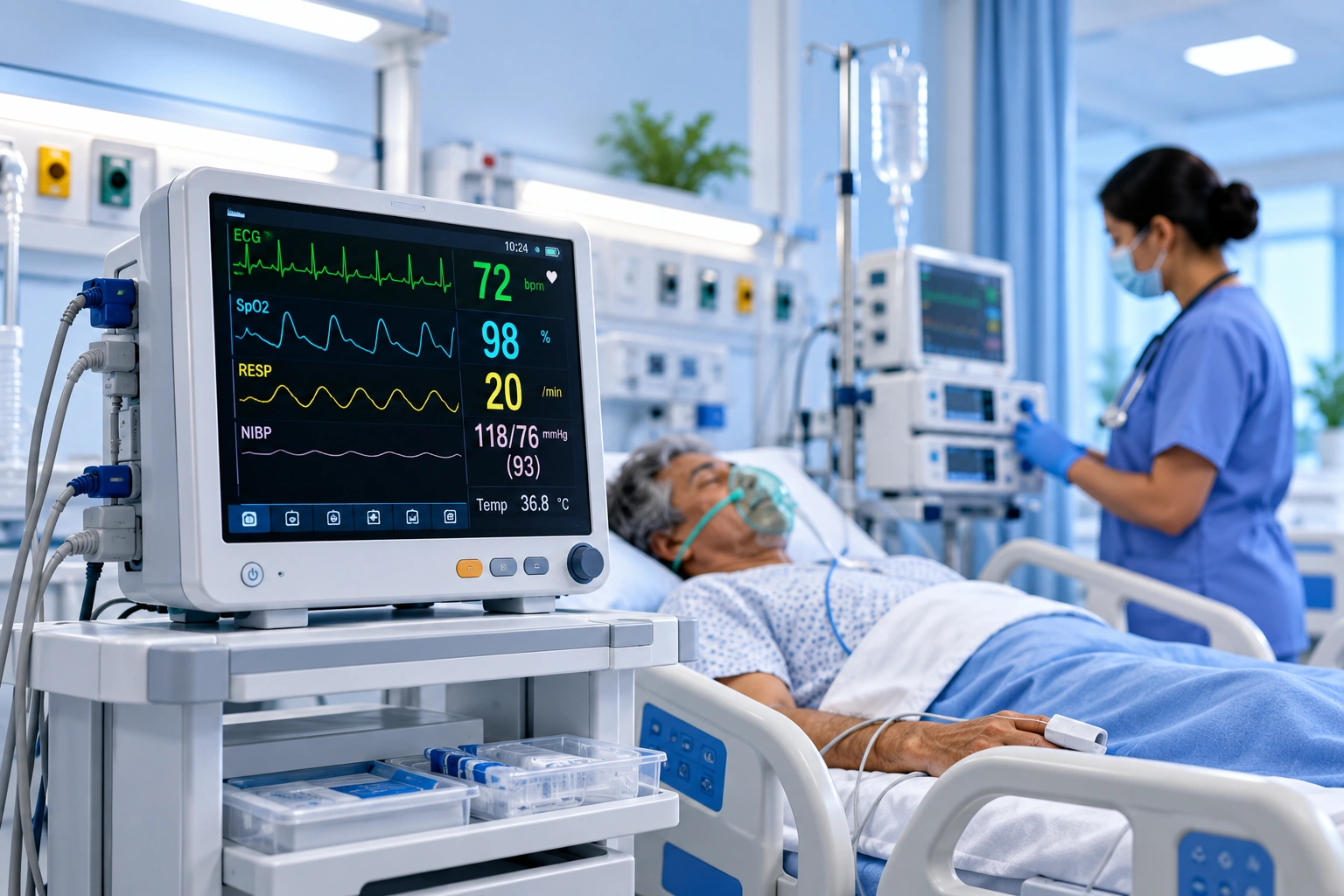
Advanced Patient Monitoring for Better Patient Care
A Patient Monitor is an important medical device used in hospitals, ICUs, emergency departments, operation theatres, and other healthcare environments. It helps healthcare professionals observe important patient parameters and identify changes that may require attention.
Patient monitors can display different parameters depending on the model and configuration. Commonly monitored parameters may include heart rate, blood pressure, oxygen saturation, respiratory rate, and temperature.
Why Patient Monitoring Matters
Continuous observation can provide healthcare professionals with valuable information about a patient's condition. Instead of relying only on occasional measurements, a patient monitor allows vital parameters to be viewed conveniently on a single display.
This can be particularly useful in critical care environments where patients require close observation. Clear displays and easy-to-use interfaces can also help medical staff access information quickly.
Selecting a Patient Monitor
Healthcare facilities should consider the required parameters, screen size, portability, alarm features, connectivity, ease of use, and maintenance requirements when choosing a patient monitor.
The right monitor should match the clinical environment and the needs of the healthcare professionals using it.
Conclusion
Patient monitors are an important part of modern patient-care infrastructure. By providing convenient access to vital patient information, they support healthcare professionals in monitoring patients and responding to changing clinical conditions.